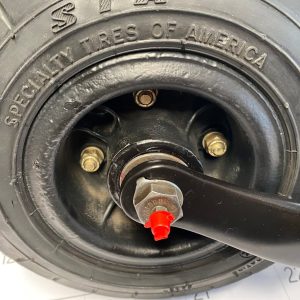
The Scott 3200A Tailwheel – Fully Rebuilt offers a dependable replacement option for suitable taildraggers requiring responsive steering, smooth swiveling, and reliable aircraft ground handling. Clear rebuild records help aircraft owners and maintenance professionals evaluate the tailwheel before installation.
A Scott 3200A Tailwheel Assembly can contribute to controlled taxiing, parking, takeoff alignment, click here landing rollout, and maneuvering in confined ramp areas. Professional rebuilding can renew worn mechanical relationships when suitable components and procedures are used.
The Aircraft Tailwheel Assembly carries tail loads while allowing the aircraft to taxi, turn, park, take off, and land on suitable surfaces. The General Aviation Tailwheel should be selected according to aircraft weight, tail load, wheel size, spring arrangement, steering configuration, runway environment, and installation requirements.
Whether the goal is a Replacement Aircraft Tailwheel or a broader purchase of General Aviation Landing Gear Parts, qualified review provides the strongest foundation.
Understanding the Scott 3200A Tailwheel
Its established design makes it suitable for consideration in restoration projects, utility operations, bush flying, private ownership, and flight training. The tailwheel operates together with the aircraft tail spring, steering chains or links, steering springs, rudder system, attachment bolts, and surrounding structure.
Maintaining a Scott 3200A Tailwheel Assembly
The assembly is intended to withstand repeated ground operation when installed, adjusted, lubricated, and serviced correctly. Detailed documentation gives buyers a stronger basis for comparing available Scott 3200A Tailwheel Assemblies.
Scott Tailwheel Assembly Service Quality
A thorough rebuild generally begins with complete disassembly, careful cleaning, detailed inspection, and measurement of wear-sensitive areas. A freshly painted assembly may still contain worn bearings, weak springs, excessive clearances, or damaged steering components when no true rebuild was completed.
How an Aircraft Tailwheel Assembly Works
Correct mechanical condition supports predictable aircraft behavior on the ground. A bent or fatigued tail spring can alter alignment and the aircraft’s ground attitude.
General Aviation Tailwheel Applications
A General Aviation Tailwheel may operate from paved airports, grass runways, gravel strips, private fields, dirt airstrips, and backcountry locations. Experimental aircraft installations should be evaluated according to the builder’s configuration and applicable operational requirements.
Choosing an Aircraft Tailwheel
An Aircraft Tailwheel supports the rear fuselage and helps the airplane move during taxiing, parking, turning, takeoff, and landing. Abnormal wear may indicate misalignment, bearing problems, repeated shimmy, poor adjustment, or use on abrasive surfaces.
Maintaining a Taildragger Tailwheel
Mechanical wear, poor alignment, or unsuitable steering adjustment can increase pilot workload. Pilots should avoid unnecessary mechanical stress while using operating techniques appropriate to the aircraft and surface.
Aviation Tailwheel System Components
A worn tail spring or loose mounting bolt may cause poor tracking even when the rebuilt tailwheel remains mechanically serviceable. Left and right steering connections should be inspected for matching condition and correct installation.
Choosing a Tailwheel Steering Assembly
Wear in these components may create looseness, poor tracking, inconsistent engagement, or delayed control. Hardware should remain secure, correctly sized, and appropriate for the assembly.
Aircraft Taxi Steering Performance
Its mechanical condition influences how easily the aircraft can turn and track on the ground. Towing should use appropriate equipment and procedures that avoid overloading steering arms, chains, springs, forks, or mounting structures.
Maintaining Scott 3200 Series Components
Operators may value the availability of maintenance experience and replacement components for suitable configurations. A visually similar tailwheel may contain important differences affecting installation or operation.
Maintaining a Heavy-Duty Aircraft Tailwheel
A Heavy-Duty Aircraft Tailwheel may be considered for utility, bush, training, agricultural, work-oriented, or backcountry aircraft exposed to demanding ground use. Aircraft operating regularly from unimproved strips may require more frequent servicing.
Choosing Tailwheel Aircraft Parts
Correct Tailwheel Aircraft Parts protect the integrity and performance of the rebuilt assembly. The rebuild should examine all interacting parts rather than focusing on external appearance.
Choosing an Aircraft Steering Tailwheel
An Aircraft Steering Tailwheel helps direct the airplane during taxi by responding to the rudder-linked steering arrangement. Uneven tire wear may indicate alignment, bearing, or steering concerns.
Buying a Replacement Aircraft Tailwheel
The removed assembly can provide useful measurements, markings, hardware details, and steering-arm orientation. The replacement should be inspected after delivery for shipping damage, missing components, rough bearings, incorrect hardware, cracks, or visible defects.
Maintaining General Aviation Gear Components
A complete landing gear assessment may reveal concerns beyond the tailwheel itself. Used or rebuilt landing gear parts should be listed with accurate identification, condition, rebuild history, package contents, and available documentation.
Scott 3200A Pre-Purchase Inspection
A detailed inspection reduces uncertainty and supports a more informed transaction.
- Request photographs of the front, rear, sides, wheel, fork, steering arms, mounting area, identification marks, and loose components.
- Arrange professional evaluation when rebuild quality, structural condition, or internal serviceability remains uncertain.
- Inspect and photograph the assembly immediately after delivery before installation, adjustment, disassembly, lubrication changes, or modification.
Scott Tailwheel Fitment and Adjustment
Every fastener and component should match the intended installation and remain properly secured. The tailwheel should move through its intended range without binding, abnormal looseness, interference, or contact with surrounding components.
Pilots should report delayed steering, pulling, vibration, noise, binding, or irregular swivel behavior.
Scott Tailwheel Maintenance Guide
The rebuilt assembly should be inspected according to aircraft use, operating surface, maintenance requirements, and observed condition. Early attention supports reliable long-term operation.
Responsible care supports dependable Scott Tailwheel Assembly performance.
Scott 3200A Tailwheel Conclusion
When professionally inspected, installed, adjusted, tested, and maintained, the Scott 3200A Tailwheel – Fully Rebuilt can become a reliable component of a compatible conventional-gear aircraft. Careful technical and commercial evaluation can reduce compatibility problems, repeated repairs, project delays, and unexpected costs.
Whether buyers need an Aircraft Tailwheel, Taildragger Tailwheel, Aviation Tailwheel System, or Tailwheel Steering Assembly, qualified inspection remains essential. With verified compatibility, correct installation, professional steering adjustment, suitable lubrication, and routine inspection, the assembly can provide dependable long-term value.